
Opera Carmen
Baalbeck International Festival
25th and 26th, June, 2025
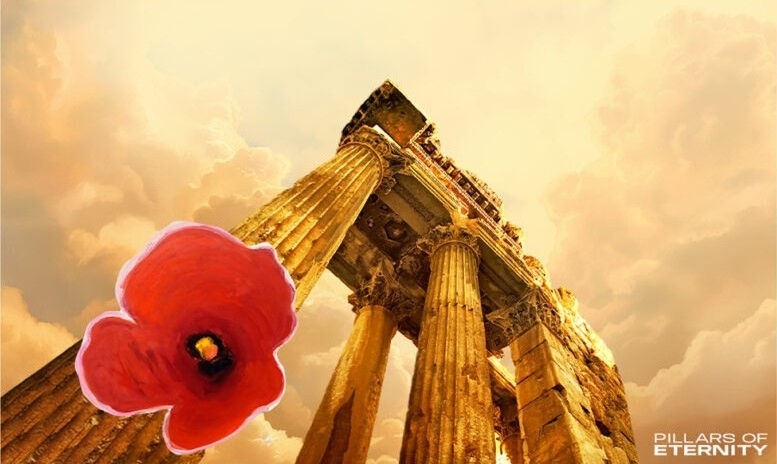
Carmen in Baalbeck
by Jorge Takla and Toufic Maatouk
JORGE TAKLA
This opera is about freedom, passion, femicide, sexual harassment, female strength—but above all, it’s a political story. Carmen isn’t just a seductive woman who dies for love. She fights for her autonomy and her people’s independence. That makes her universal.
I wanted to avoid the clichés: fans, castanets, bullfighters. All of that feels decorative and disconnected from what’s really at stake. My approach was to remove the folklore and dive deep into the human drama the opera offers.
I wanted to make Carmen a little Lebanese. By bringing in local elements, I sought a stronger emotional, social, and political connection with the audience. It’s not about geography—it’s about resonance.
Staging it on the steps of the Temple of Bacchus was a bold and symbolic choice. We created a circular arena for 2,200 people, giving the performance a near-ritualistic dimension. We were surrounded by history, and that gave the production incredible power.
I invited fashion designer Rabih Kayrouz to design the costumes because I wanted something refined yet rooted. The set featured projections of visual artist Nabil Nahas’s work directly onto the temple’s columns—a gesture that united ancient past and present.
My Carmen isn’t a period piece. It’s a Carmen of now. Because, sadly, what she denounces—control over women’s bodies, violence, intolerance—still resonates in 2025.
(Excerpts from interview with Jorge Takla by journalist Zéna Zalzal, published on July 24, 2025, in the Lebanese newspaper L’Orient-Le Jour, on the occasion of the opera Carmen’s premiere at the Baalbeck International Festival.)
TOUFIC MAATOUK
One of the biggest challenges was shaping the musical direction of Carmen within the unique setting of the Baalbeck Festival. Artistically, it meant reimagining Bizet’s score in a space as monumental and acoustically complex as the Roman temples. Every musical gesture had to be adapted to resonate both physically and emotionally in such an open-air environment. Logistically, coordinating with international soloists, the orchestra, and the technical teams — all while navigating regional instability — required constant flexibility and strong leadership. Yet, it was precisely this blend of adversity and ambition that gave the production its distinctive power.
Bringing Carmen to life in the Temple of Bacchus is nothing short of a spiritual experience. This temple, with its centuries of history, stands as a testament to resilience, beauty, and cultural legacy, qualities that resonate deeply with Bizet’s music. Conducting this opera amidst such grandeur adds a profound layer of meaning: every note reverberates not just in space, but in time. It’s a reminder that art transcends eras and borders. For me, it’s both a privilege and a responsibility to honor that space with a work as emotionally charged and human as Carmen.
What makes this Carmen truly unique is its cultural and human dimension. Musically, we remained faithful to Bizet’s intentions while letting the natural acoustics and energy of Baalbeck shape the sound, it’s a living dialogue between the score and the stones. Culturally, performing Carmen in Lebanon, with a cast and team from across the region and beyond, allows the opera’s themes of freedom, identity, and defiance to take on new relevance.
Working with Jorge Takla was central to this vision. His theatrical sensitivity, attention to psychological detail, and deep understanding of Mediterranean culture gave the production an emotional truthfulness that elevated everything — from the smallest gesture on stage to the overall rhythm of the performance. Together, we crafted a Carmen that speaks not only to the drama of Bizet’s world, but to the complexity and beauty of ours.
(Interviewed by Julia Requião for Artematriz)